Health Benefits of Himalayan Pink Salt for Cattle: A Complete Guide for Farmers
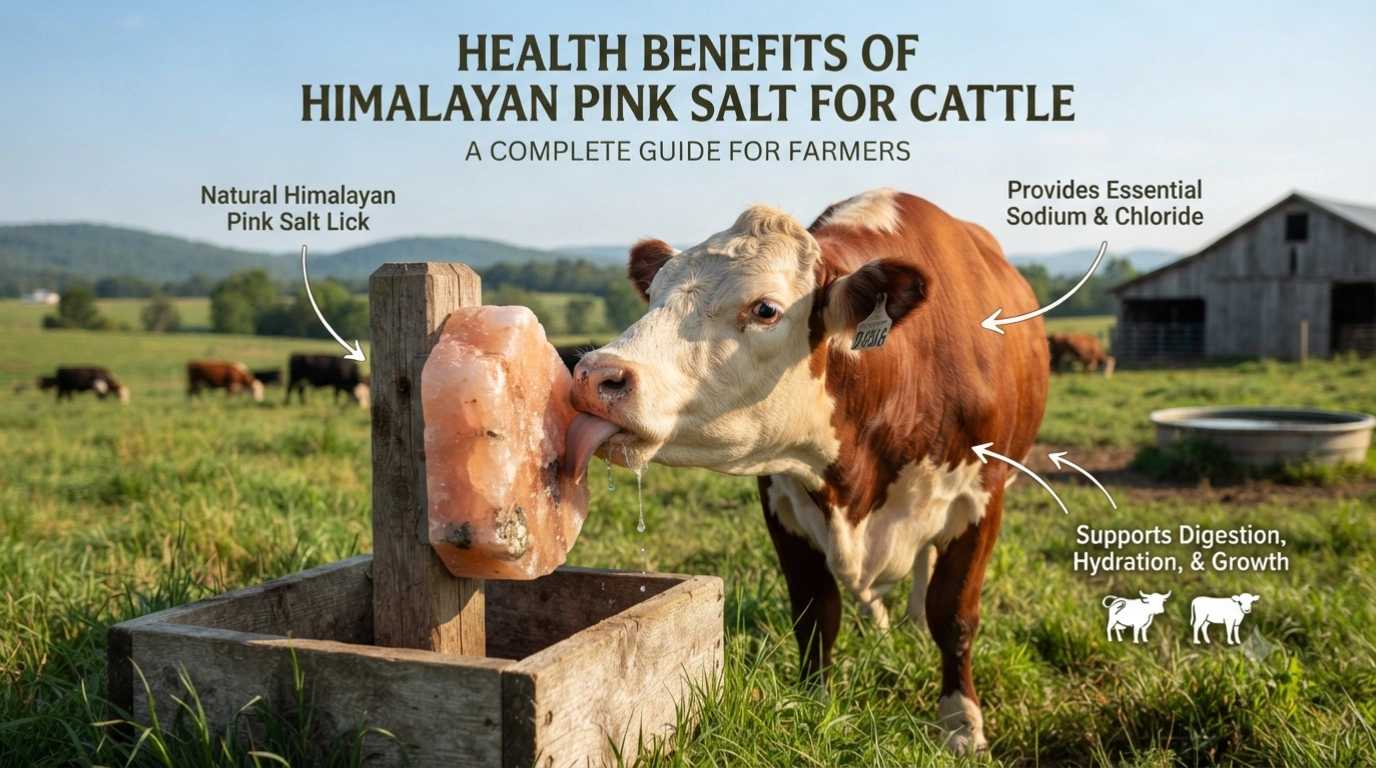
Health Benefits of Himalayan Pink Salt for Cattle: A Complete Guide for Farmers
Minerals are the quiet workhorses in cattle nutrition. They're not listed on the label of a feed like protein or fiber, but if they are absent, digestion slows, fertility drops and milk yields suffer. Two minerals that salt is most reliably providing are sodium and chloride . These are especially easy to overlook until a herd starts to show signs of deficiency .
This is where Himalayan pink salt has found an ever-growing following among livestock owners. It’s mined from ancient salt deposits, and processed with little refinement, and is often marketed as a more “natural” alternative to standard livestock salt. In this guide, we’ll look at what Himalayan pink salt is, why cattle need salt, the practical benefits of Himalayan salt, and how to use it properly as part of a balanced mineral program, not a substitute for one.
What Is Himalayan Pink Salt?
Himalayan pink salt is rock salt mined mainly from deposits in the Punjab region of Pakistan, near the foothills of the Himalayas. The pink to reddish hue is caused by trace amounts of iron oxide and other minerals that were embedded inside salt crystals when they were formed millions of years ago.
Himalayan pink salt is usually less processed than regular table salt. Regular table salt is often highly refined and may contain additives such as iodine or anti-caking agents. That means that it has small amounts of naturally occurring trace minerals in addition to the major ingredients sodium and chloride.
For livestock use, Himalayan pink salt is available in several forms:
Salt licks or blocks — solid formed blocks cattle can lick freely
Chunks — irregular natural pieces, often placed in pastures or feeders
Granules or coarse salt — used for mixing into feed
Powder — finely ground, though less common for free-choice feeding
Related keywords: Himalayan pink salt, natural mineral salt, pink salt for livestock
Why Do Cattle Need Salt?
Sodium and chloride are important elements in the physiology of cattle. Sodium helps to maintain fluid balance, transmit nerve impulses and allow muscle contractions. Chloride is important in forming hydrochloric acid during digestion. Cattle cannot produce these minerals themselves so they must be obtained from diet or supplemental salt sources.
Most forage diets are naturally low in sodium, which is why salt is one of the few minerals cattle will actively seek out and consume on a “free-choice” basis when provided.
Symptoms of Mineral Deficiency
When cattle don't get enough salt or key minerals, the effects tend to show up gradually:
Reduced appetite
Weight loss
Low milk production
Poor fertility
Weak muscles
Lethargy
Catching these signs early — and correcting them with proper mineral access — can prevent larger productivity losses down the line.
Top Health Benefits of Himalayan Pink Salt for Cattle
Supports Healthy Digestion
Adequate salt intake helps maintain proper rumen function, which in turn encourages consistent feed intake. When cattle have reliable access to salt, they tend to eat more steadily, and their bodies are better equipped to absorb the nutrients in their feed.
Improves Hydration
Sodium and chloride are key players in electrolyte balance. Cattle with consistent salt access tend to drink more water, which helps prevent dehydration — particularly important during hot weather or periods of heavy exertion.
Boosts Milk Production
Dairy cattle have elevated mineral demands during lactation. Maintaining proper sodium balance supports the physiological processes behind milk synthesis, making salt access a meaningful part of supporting dairy performance.
Promotes Strong Bones and Teeth
While sodium and chloride are the main minerals in Himalayan pink salt, the trace minerals it contains can offer modest support for skeletal development, which is particularly relevant for growing calves.
Enhances Muscle and Nerve Function
Sodium is directly involved in muscle contraction and nerve signal transmission. Cattle with insufficient sodium intake are more prone to muscle weakness and reduced physical performance.
Supports Reproductive Health
Balanced mineral nutrition, including adequate sodium intake, plays a supporting role in fertility, healthy pregnancies, and overall breeding performance.
Strengthens the Immune System
The trace minerals present in Himalayan pink salt — such as zinc and copper — contribute in small amounts to immune function, complementing an overall mineral nutrition program.
Encourages Better Growth
Cattle with proper access to salt tend to show improved feed efficiency, since their digestive systems are working as intended. This translates into healthier, more consistent weight gain over time.
Trace Minerals Found in Himalayan Pink Salt
Mineral | Function in Cattle |
Sodium | Fluid balance |
Chloride | Digestion |
Potassium | Muscle function |
Magnesium | Bone health |
Calcium | Growth |
Iron | Blood health |
Zinc | Immunity |
Copper | Enzyme function |
Manganese | Bone development |
Important note: Himalayan pink salt primarily provides sodium and chloride. The other minerals listed above are present only in trace amounts and should not be relied upon as a substitute for a properly formulated mineral supplement. Think of pink salt as one piece of the mineral puzzle, not the whole picture.
How to Feed Himalayan Pink Salt to Cattle
Salt Licks
Free-choice salt licks allow cattle to self-regulate their intake based on their individual needs. For best results, place licks in accessible, shaded areas near water sources or common grazing paths, and avoid low-lying spots where they might collect moisture and degrade faster.
Loose Salt
Loose granular salt can be mixed directly into feed rations. This method allows for more controlled intake and is often preferred in dairy operations where precise mineral balancing matters.
Mineral Blocks
For grazing cattle, mineral blocks that combine salt with other essential nutrients offer a convenient, low-maintenance option, especially in larger pastures where daily feed mixing isn't practical.
Recommended Salt Intake for Cattle
Cattle Type | Approximate Daily Salt Requirement |
Calves | Varies by age and diet |
Beef Cattle | Based on body weight and ration |
Dairy Cattle | Higher needs during lactation |
Exact salt requirements vary depending on body weight, diet composition, climate, and production stage. Because these factors differ from herd to herd, it's best to follow veterinary or livestock nutritionist guidance rather than a one-size-fits-all number.
Himalayan Pink Salt vs Regular Salt for Cattle
Feature | Himalayan Pink Salt | Regular Salt |
Processing | Minimal | Highly processed |
Trace Minerals | Present in small amounts | Very limited |
Artificial Additives | Usually none | May contain anti-caking agents |
Livestock Preference | Often used as natural salt licks | Common feed salt |
Is Himalayan Pink Salt Safe for All Livestock?
Cattle — Generally safe and well tolerated as part of a balanced diet.
Buffalo — Similar sodium and chloride needs to cattle; typically safe in appropriate amounts.
Goats — Can benefit from Himalayan pink salt, though overall mineral needs differ from cattle.
Sheep — Use caution with mixed mineral products. Sheep are notably sensitive to copper, and products formulated with cattle in mind may contain copper levels that are unsafe for sheep. Always check formulations carefully before use.
Horses — Often given Himalayan pink salt as a lick, though as with all species, intake should be monitored.
Best Practices for Using Himalayan Pink Salt
Always provide clean drinking water alongside salt access
Offer free-choice access where appropriate for the herd's needs
Store salt in a dry place to prevent clumping or degradation
Monitor intake periodically to catch over- or under-consumption early
Combine pink salt with a balanced mineral nutrition program rather than relying on salt alone
Common Mistakes Farmers Should Avoid
Overfeeding salt without monitoring actual consumption
Assuming pink salt alone meets all mineral needs
Ignoring water availability, which is essential for salt to function properly
Poor placement of salt licks, making them hard to access or prone to spoilage
Not consulting a veterinarian or livestock nutritionist when designing a mineral program
Frequently Asked Questions
Is Himalayan pink salt better than ordinary salt for cattle?
It offers less processing and small amounts of additional trace minerals compared to regular table salt, but the core benefit for cattle — sodium and chloride — is similar between the two. The choice often comes down to farmer preference and avoiding artificial additives.
Can calves consume Himalayan pink salt?
Yes, though intake should be appropriate for their age and size, and introduced gradually as part of a broader feeding plan.
How often should cattle use a salt lick?
Free-choice access is generally recommended, allowing cattle to self-regulate intake daily based on their needs.
Does Himalayan pink salt increase milk production?
It supports the mineral balance needed for healthy lactation, but it works best as one part of a complete dairy nutrition program rather than a standalone solution.
Can Himalayan pink salt replace mineral supplements?
No. It primarily supplies sodium and chloride; other essential minerals should still come from a properly formulated supplement.
Is Himalayan pink salt suitable for beef cattle?
Yes, when offered as part of a balanced feeding program appropriate to body weight and production stage.
Conclusion
Himalayan pink salt is a natural source of sodium and chloride that is minimally processed for cattle and contains trace minerals that are not normally found in refined table salt. Benefits include improved digestion and hydration, contributing to reproductive health and steady growth, and can affect nearly every aspect of herd performance.
That said, pink salt works best as part of a bigger picture. It is not a substitute for a complete mineral program, but should be used along with access to clean water, careful monitoring and the advice of a veterinarian or livestock nutritionist. For those who wish to move away from heavily processed feed salt, high quality Himalayan pink salt is a worthy addition to a comprehensive, well managed feeding program.